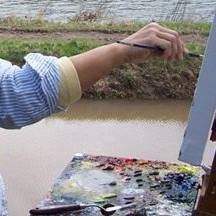
Hello Everyone, I am very pleased to announce that I will be leaving in a few days to paint in beautiful Italy for six weeks. The first four weeks I will be in Montegiovi, in southern Tuscany as part of an artist residency through a wonderful program called La Baldi. Located in the historic village of Montegiovi, Italy, in southern Tuscany, Cultivate’s La Baldi Residency is open to artists, writers, and researchers. My friend and colleague in many adventures, Chris Willey will also be participating as an artist resident with me.
Arriving in Milan for a few days, we will have just enough time to see the beautiful sites of Milan including the Duomo and to visit the Pinacoteca di Brera. Then taking a lovely train to Grosseto, we will meet our driver who will take us to the little Medieval village of Montegiovi which sits on a hill in the area of Mount Amiata. It’s part of the commune of Castel del Piano located in the Province of Grosseto, Tuscany. The village is about 5 km from Castel del Piano and 50 km from Grosseto. It is pretty isolated with no real stores to speak of, no tourist, no traffic, just beauty!
“Monte Amiata rises in the east from vines and olives to oaks, chestnuts and finally a forest of tall beeches at the summit. The micro-climate of the Conca D’Oro valley surrounds Montegiovi, providing extremes of temperature between mountain and sea that enhances the flavor and quality of the oil, wine, and food. Ancient trees, berries, figs, mushrooms, grapes, herbs, olives, and grains with millenia in their ancestry cover the terrain and speak to a long history of stewardship and sustenance, passion and love.”
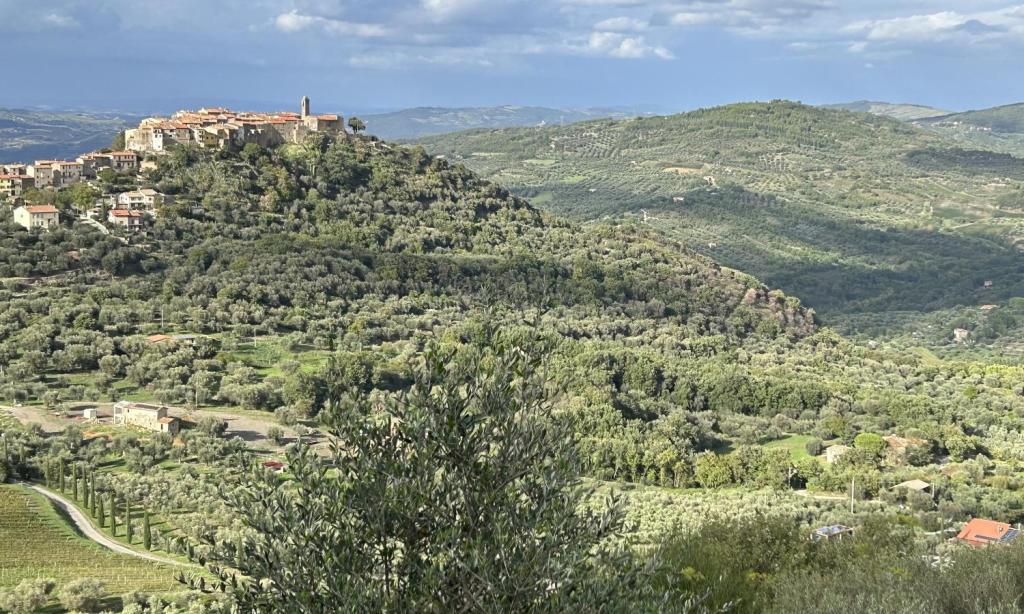
I love knowing about the history of a place. It seems there have been many inhabitants since Antiquity. Etruscan and Roman people populated the area. In the Middle Ages, it was surrounded by fortified settlements and in modern times it served as a haven for the resistance.
“It was on this mountain, populated by farmers and shepherds, that on September 8, 1943, many young draft dodgers and victims of political persecution took refuge here, leading to the formation of a partisan group. The locals, offered help and shelter to many prisoners of war. So between September 1943 and August 1944, Monte Giovi was a haven of freedom and resistance to Nazism and Fascism.” I like knowing that.
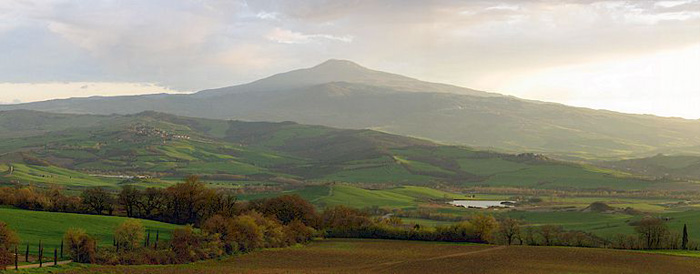
It is the highest mountain in southern Tuscany at 1,736 metres (1.0787 mile)
“Monte Amiata, often referred to as the “Mystic Mountain” of Tuscany, There are many legends and folklore about this ancient mountain. It is associated with mystical and spiritual significance. Some of the rituals linked to fire are still alive. The symbol of flames chasing away evil and giving new life. “On Monte Amiata, festivals, rites and traditions are celebrated every year that are linked to fruit and elements of the earth such as water from the springs, mushrooms and chestnuts …”. I am sure I will be mystified by its presence.
The Sant’Elena gate is the main entrance to the upper town. The name of the gate comes from the Sant’Elena Chapel, an old church at service of the Castle of Montegiovi.
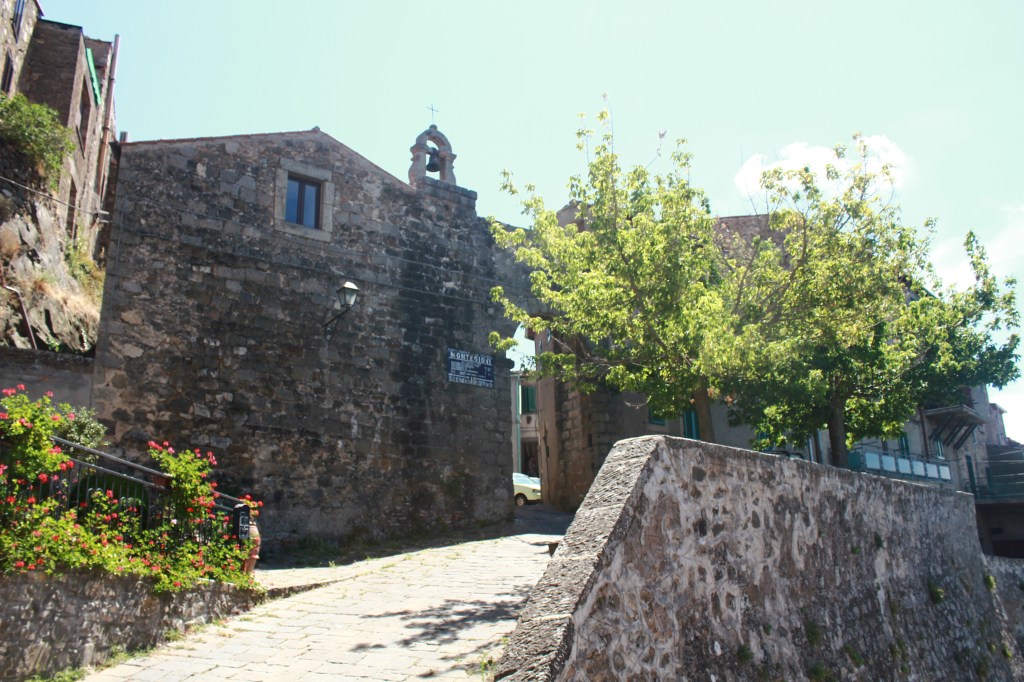
A LITTLE HISTORY….. “The city walls were built between the 12th and 13th centuries to protect the summit of the hill on which the village of Montegiovi stands, already controlled by the Sienese at the time.”
“The entire village, in fact, was part of the ancient Castle owned by the Guidi family, a powerful noble family that controlled most of Tuscany during the Middle Age.In the very beginning of the XIV Century, the Guidi’s were literally erased from the history by the Florentine Signoria.”
Even though there are walls of the old Montegiovi Castle, there is no a castle. Apparently, over the years the castle was dismantled piece by piece and became part of the homes. As many places in Italy Montegiovi is famous for its Churches. “The San Martino’s Church (XIII century) is the oldest and most important one. The Madonna degli Schiavi (XVI century) is beautiful and here you can see Francesco Nesini’s frescoes.”
After months of looking on the internet and reading about all of these amazingly beautiful places I will soon have the privilege of painting there. Wish me luck! I will be sharing photos of my journey when I can. The work I will continuously post on facebook and on my art travel/blog.
Ciao for now,
Jeanean
 Jeanean Songco Martin Painting Blog
Sounds absolutely wonderful. JJ
LikeLike
Thanks John, Hope I don’t fall off the side of the mountain. Of all times to have either a pulled muscle or plain ole’ arthritis in my right leg. Bringing walking sticks. I am looking forward to a little beauty, a change from craziness. Stay well
LikeLike
so excited for you, Tiepolo and all the masters you carry around in you besides your suitcases. Enjoy. Be safe.stay Healthy.
LikeLike